
With bodies no larger than a human thumb, hummingbirds are among nature’s most astonishing high-performance creatures. Everything about them operates at the edge of possibility — from how they fly to how they fuel their tiny bodies.
Their name comes from the unmistakable hum created by wings beating at breathtaking speed. In normal flight, wings can move around 50 times per second. During extreme manoeuvres, that number can surge to nearly 200 beats per second.
Few animals on Earth expend as much energy, relative to size, as a hummingbird hovering in mid-air.
And hummingbirds don’t just fly — they redefine flight.
Built for the Impossible
Hummingbirds are the only birds capable of true backward flight. They can hover in place, dart vertically, reverse direction mid-air, and execute sharp aerial turns with remarkable precision.
The male Anna’s hummingbird takes this athleticism even further. During courtship displays, it climbs high into the sky before plunging earthward at speeds approaching 60 miles per hour.
At peak velocity, it can cover 385 times its body length per second — the most extreme aerial manoeuvre relative to size recorded in the bird world.
Tiny body. Supersonic performance.
A Metabolism at Full Throttle
To sustain that level of performance, hummingbirds run on the fastest metabolism of any vertebrate relative to their size.
They feed roughly every 10 minutes and may consume up to twice their body weight in food each day. Nectar provides rapid fuel, while insects, spiders, and sap supply essential protein.
To grasp the scale:
If a human had the same metabolic rate, it would require the equivalent of hundreds of pounds of food per day just to survive.
At night, these high-energy dynamos switch strategies. To conserve fuel, they enter torpor — slowing their heart rate dramatically and lowering body temperature in a controlled, hibernation-like pause until morning.
Solo Travellers, Record Distances
Despite their size, hummingbirds are formidable long-distance migrants — and they travel alone.
Some species cross 500 miles of open water over the Gulf of Mexico in a single non-stop flight lasting nearly 20 hours. Rufous hummingbirds migrate up to 4,000 miles between Mexico and Alaska. The southern giant hummingbird has been recorded completing a 5,200-mile round trip.
Before departure, a hummingbird can nearly double its weight, storing critical fat reserves for the journey.
No formation flying. No flock support. Just instinct, memory, and endurance.
A World of Colour Humans Cannot See
There are more than 340 species of hummingbirds, all native to the Americas. Collectively, they represent one of the most dazzling displays of colour in the natural world.
Their iridescent feathers shimmer not because of pigment, but because of microscopic structures that refract and scatter light. As viewing angles shift, colours ignite and vanish like living prisms.
Recent research suggests hummingbirds may be more colourful than all other bird species combined.
Even more remarkable: they can see ultraviolet light and distinguish colour combinations invisible to the human eye.
The world a hummingbird sees is richer than ours — layered with colours we cannot perceive.
Engineering at a Miniature Scale
Hummingbird nests are masterpieces of compact design.
Built from moss, lichen, and spider silk, they are often no larger than a half-dollar coin. The smallest species constructs nests just a few centimetres wide, cradling eggs about the size of coffee beans.
Spider silk allows the nest to stretch as chicks grow — a flexible, living cradle engineered for survival.
Only females build the nests and raise the young, typically laying two eggs.
Precision Feeding Mechanics
A hummingbird’s tongue is a marvel of biomechanics.
Forked and lined with tiny lamellae, it acts like a microscopic nectar trap. When dipped into nectar, the tips unfurl. As the tongue retracts, the structure rolls inward, trapping liquid inside tube-like grooves.
This happens 15–20 times per second.
When not in use, the tongue coils back inside the skull — wrapping around internal structures in a feat of biological efficiency.
Memory, Mapping and Brain Power
Hummingbirds may visit hundreds of flowers daily — and they remember them.
They track which flowers contain the richest nectar, how long each takes to refill, and even the order of preferred feeding sites. Their brain accounts for roughly 4% of their body weight — the highest brain-to-body ratio of any bird.
Tiny body. Outsized cognition.
Conservation: Fragile Extremes
Not all hummingbird stories are secure.
Around 15% of species are considered vulnerable to extinction, and several appear on the IUCN Red List. Habitat loss and climate shifts threaten some of these biological marvels.
Yet hummingbirds also demonstrate resilience — adapting to gardens, feeders, and restored habitats when conditions allow.
Like seahorses — who perform a daily greeting dance to maintain their bond — hummingbirds remind us that nature builds connection through ritual and precision.
Hummingbirds also depend on the forest networks that ecologist Suzanne Simard revealed — intricate underground systems where species quietly sustain one another.
A Study in Biological Extremes
Some hummingbirds weigh less than two grams, making them the lightest birds in North America.
They hover in place using physics-defying wingbeats.
They dive at highway speeds.
They migrate thousands of miles alone.
They see ultraviolet colours.
They feed every 10 minutes.
They power down at night to survive.
In every measurable way, hummingbirds operate at the outer limits of biology.
Sometimes, the most extraordinary engineering on Earth fits in the palm of your hand. One man’s lifelong dedication to conservation created a haven for birds and wildlife — read about Brendon Grimshaw’s incredible island. France recently made a powerful statement about wild animals too — banning their use in circuses and marine parks in a landmark piece of legislation.
Share a Pebble

Send a Pebble
Related Posts



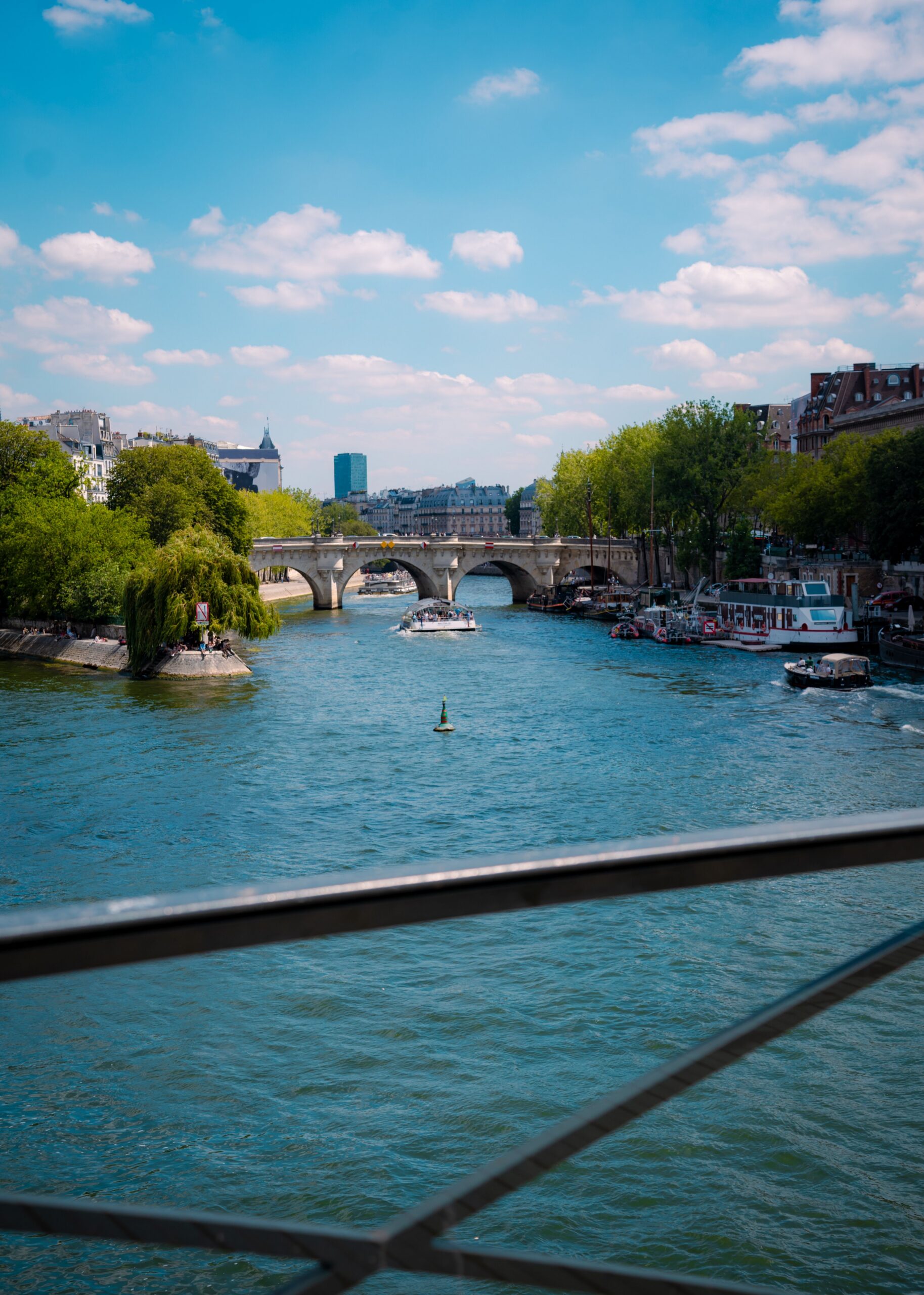
Paris Just Did Something It Hasn’t Done in 100 Years. And Everyone Jumped In.
For 100 years, swimming in the Seine was illegal. This summer Paris is opening 8 free supervised swimming sites along the river — and 150,000 people already proved the idea works.